How To Make A Paycheck Routine That Sticks
A simple payday routine for covering bills, saving first, and keeping flexible spending clear without rebuilding your whole budget.
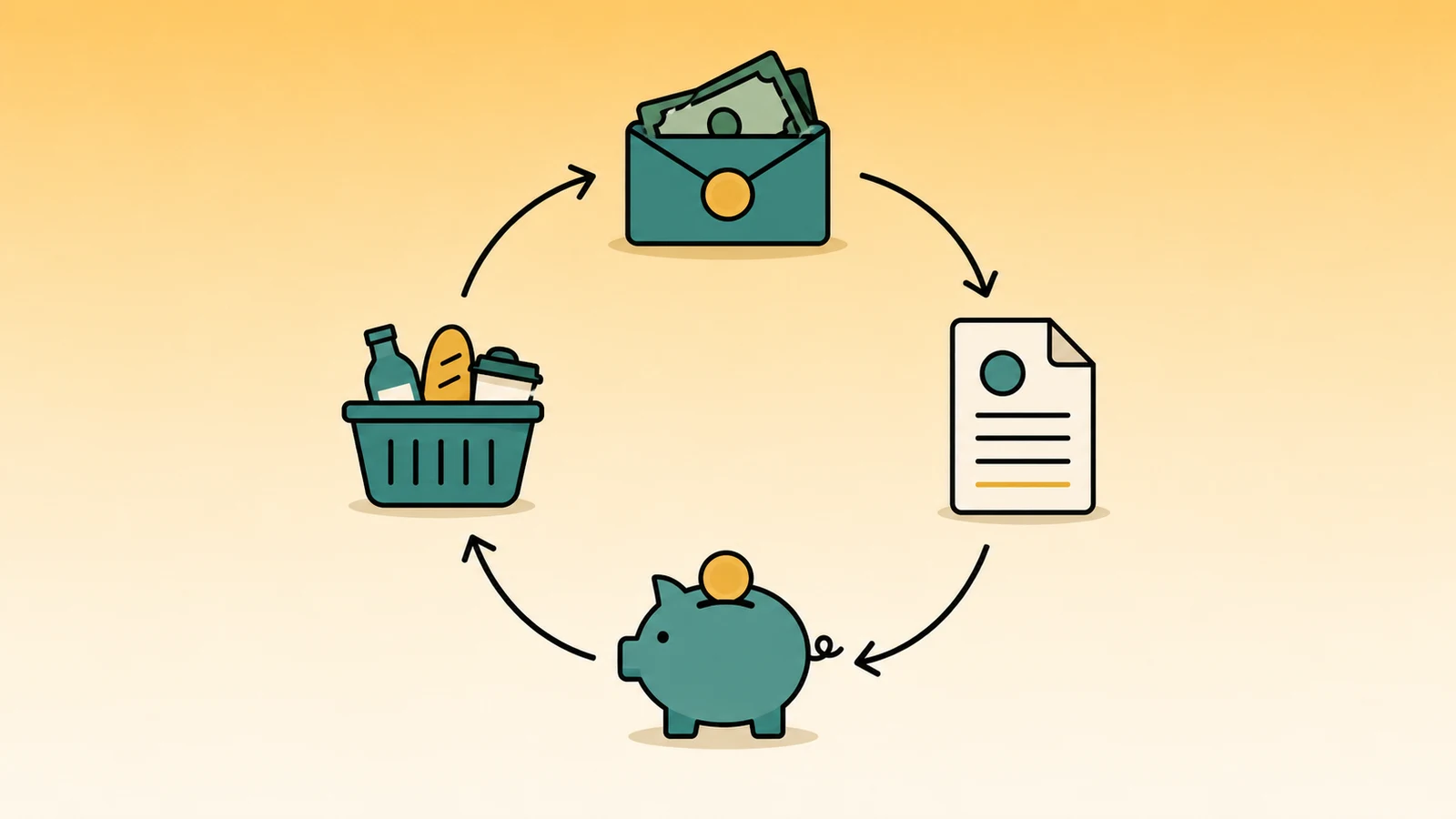
A paycheck routine is a short set of moves you make every time income lands.
That is it. Not a complete personality change. Not a 14-tab spreadsheet with color coding and emotional consequences. Just a repeatable rhythm that tells each paycheck where to go before the week starts improvising.
The best paycheck routine is small enough to repeat.
Start With The Next Paycheck Only
Do not try to solve the entire year every payday.
Look at the income that just arrived and the bills that need to be paid before the next paycheck. This keeps the routine concrete. You are not budgeting for an imaginary perfect month. You are handling the next stretch of real life.
Ask four questions:
- What bills are due before the next paycheck?
- What expenses are likely, such as groceries, gas, or childcare?
- What small amount can move to savings or debt?
- What is left for flexible spending?
This is the same shape as a budget for people who hate budgeting, just tied to payday.
Pay The Required Stuff First
Start with bills that create consequences if missed.
That usually means housing, utilities, insurance, transportation, minimum debt payments, and anything required for work, health, or basic household stability. Put those on the calendar or pay them right away if that fits your cash flow.
This step is not glamorous. Neither is electricity, until it is gone.
Move A Small Amount Before Spending Gets Loud
If saving is part of the plan, move the money early.
The amount can be small. Five dollars counts. Ten dollars counts. The point is to build the reflex while the paycheck still has room. If you wait until the end, the transfer has to compete with every tiny decision in the week.
For many people, automatic transfers make this easier. If automation feels risky, make the transfer manually on payday and keep the amount low enough that bills still clear.
Give Flexible Spending A Number
Flexible spending is the money left for groceries, gas, eating out, personal items, small fun, and everything else that is not already assigned.
This number is useful because it turns vague caution into a real boundary. “Spend less” is fog. “$180 until next Friday” is a map.
You do not have to track every purchase forever. But for the first few paychecks, checking the flexible number can show where the plan is too tight, too loose, or missing a normal expense.
Keep A Tiny Payday Checklist
A routine works better when it is visible.
Use a note on your phone, a sticky note, a calendar reminder, or a simple checklist:
- Bills checked.
- Minimum payments covered.
- Savings or debt move made.
- Flexible spending number written down.
- Next payday date confirmed.
That is enough.
If the checklist gets long, it may become another thing to avoid. Keep it short enough to finish while standing in the kitchen.
Review What Broke
After two or three paychecks, look at what did not work.
Maybe groceries were higher than expected. Maybe a bill hit before payday. Maybe the savings transfer was too ambitious. Maybe the flexible spending number was fine, but weekend spending needed a separate limit.
This is not evidence that you are bad with money. It is evidence that the routine met reality and reality had notes.
Adjust the next paycheck. That is the whole system.
Try This
On your next payday, do three moves:
- List bills due before the following paycheck.
- Move one small amount to savings or debt.
- Write down the flexible spending number.
The routine does not need to be impressive. It needs to happen again.