How To Build A Bill Buffer Before The Due Date
A practical way to build a small checking account buffer so bills stop arriving like emergencies.
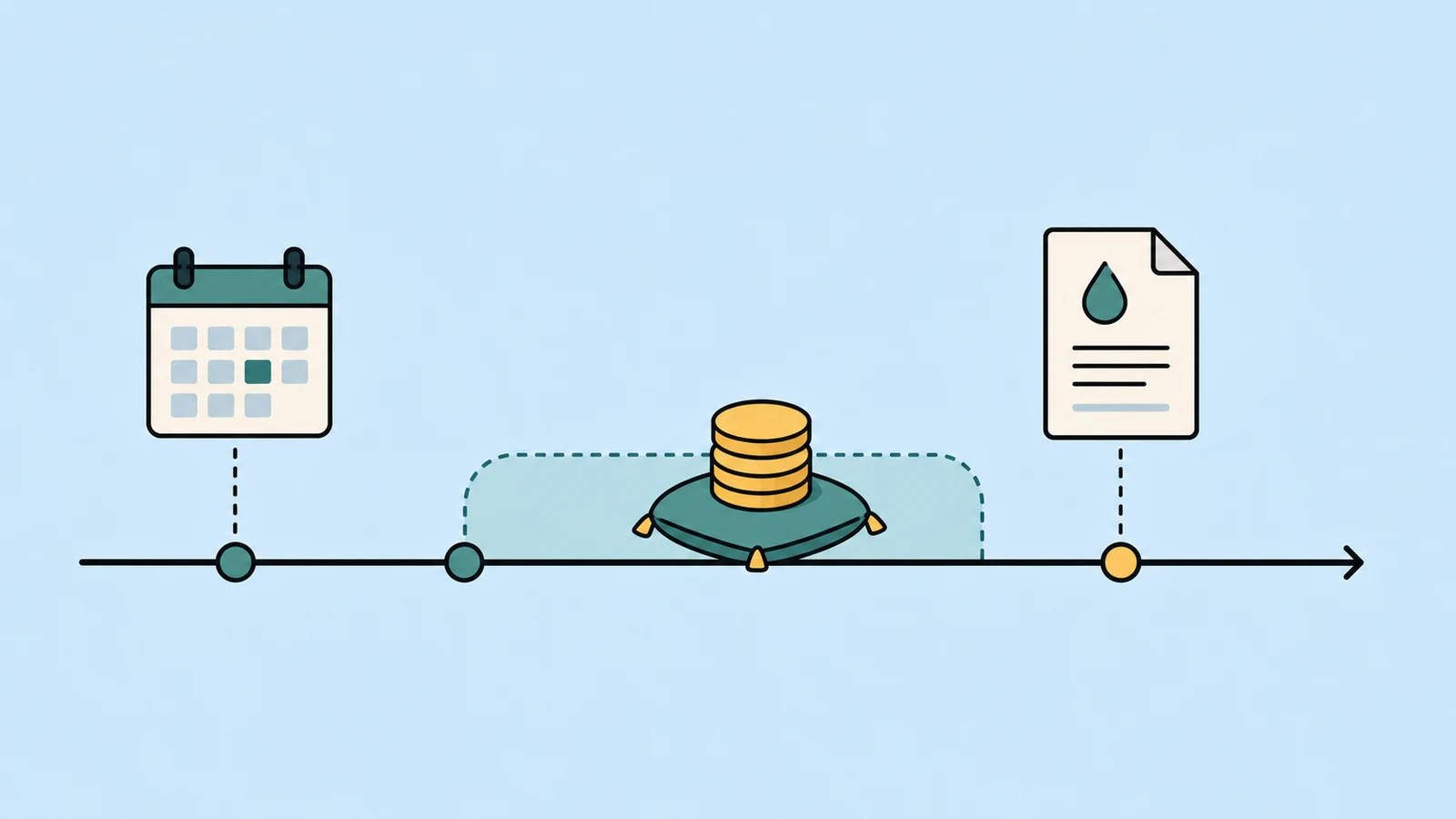
A bill buffer is extra cash in checking that exists to keep timing from wrecking the week.
It is not the same as a full emergency fund. It is smaller and more boring. Its job is to help when the electric bill clears two days before payday, the subscription renews early, or groceries cost more than expected.
Think of it as a little padding between your calendar and your balance.
Why Timing Causes Trouble
Sometimes the problem is not that the monthly income is impossible. Sometimes the problem is that bills and paychecks do not line up politely.
Rent is due before the second paycheck. Insurance hits the same week as utilities. A credit card minimum comes out before a deposit clears. The month may technically work on paper, but checking still gets squeezed.
A bill buffer helps with that squeeze.
Even $100 can make a difference if it prevents overdraft fees, late payments, or putting a normal bill on a credit card.
Start With One Small Target
Do not start by trying to keep an entire month of expenses in checking.
That may be useful someday, but it can feel too big at the beginning. Start with one small target:
- $50
- $100
- Half of one utility bill
- One week of gas
- One grocery trip
The first goal is to stop the account from hitting zero so often. A small buffer gives your plan a little room to breathe.
Keep The Buffer Separate In Your Mind
The tricky part is that a bill buffer sits in checking, where it can look spendable.
Give it a mental label. If your buffer target is $100, treat $100 as the new zero. When your balance says $143, the real flexible amount is $43.
This takes practice. Your bank app will not politely say, “Actually, friend, that first hundred is not for nachos.” You have to add the label yourself.
Build It With Leftover Bits
A buffer can grow from small leftover amounts.
After payday, once bills and essentials are handled, leave a small amount behind on purpose. It might be $10. It might be $25. If the money survives until the next paycheck, keep it there and add a little more.
This pairs well with a paycheck routine. When you know what has to happen before the next paycheck, you can decide whether any cash can stay behind as padding.
Use Windfalls Carefully
If you receive a refund, bonus, gift, or extra paycheck, consider using a piece of it to finish the buffer.
You do not have to send the whole amount. Even setting aside $100 or $200 can change the way the next few weeks feel. The point is to buy breathing room before the money gets absorbed into normal spending.
Windfalls disappear quickly when they do not have a job.
Refill It When It Gets Used
A bill buffer is allowed to get used. That is why it exists.
If the balance dips below your target because a bill cleared early, refill it before raising savings transfers or adding extra debt payments. Otherwise the same timing problem may repeat next month.
This is not failure. A useful buffer is not one that stays untouched forever. A useful buffer catches small timing problems and then gets rebuilt.
Do Not Confuse It With Emergency Savings
A bill buffer helps with timing.
Emergency savings help with bigger surprises.
Once your bill buffer is stable, consider building a separate emergency cushion. Keeping the two jobs separate makes both balances easier to understand. Checking handles the calendar. Savings handles the surprise.
Try This
Pick a new checking account zero.
If your current balance often drops below $20, aim for $50. If $50 is already normal, aim for $100. Leave small amounts behind until that number becomes the floor.
A bill buffer will not make bills fun. It just makes them a little less rude.