How To Cut Grocery Spending Without Making Food Weird
A practical way to lower grocery spending without turning meals into a joyless spreadsheet or buying food no one wants to eat.
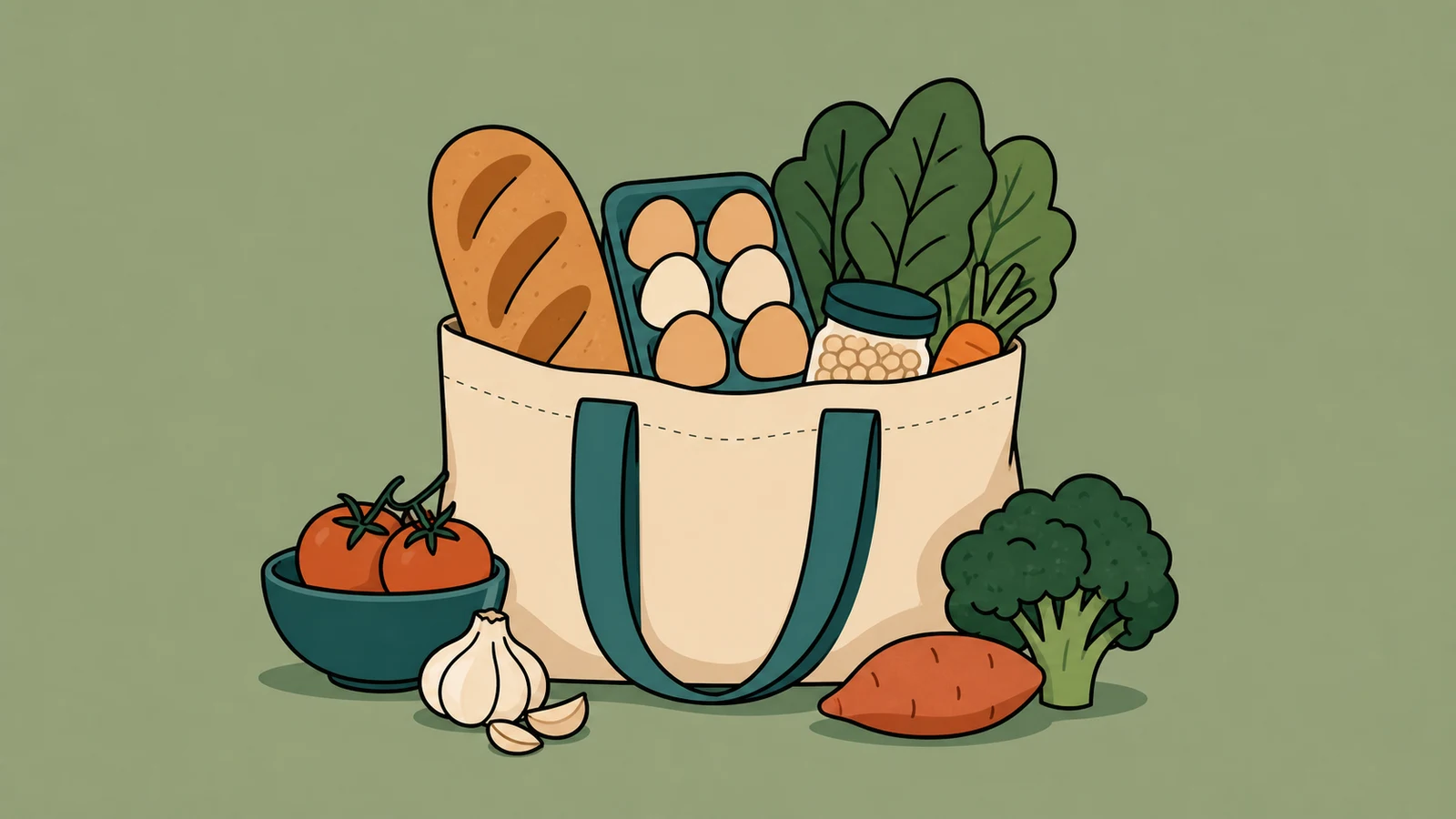
Groceries are one of the easiest expenses to feel guilty about, partly because they are necessary and partly because the cart somehow becomes a small rolling museum of good intentions.
You do not need to make food miserable to spend less. A grocery plan that only works when you cook from scratch every night, never waste a spinach leaf, and become emotionally attached to lentils is probably not going to survive a normal week.
The better goal is to reduce the leaks.
Start With What Actually Gets Eaten
Before making a new grocery rule, look at what your household already eats on a tired Tuesday.
That matters because the cheapest food is not helpful if it gets ignored until it becomes a science project. A realistic grocery plan starts with meals you will actually make, snacks you will actually use, and backup food that keeps you from ordering takeout when the day gets loud.
Write down five reliable meals. They do not have to be impressive. Sandwiches count. Eggs count. Pasta counts. A frozen meal with a side salad counts if it keeps the budget from doing a dramatic exit.
The goal is not culinary greatness. The goal is fewer expensive surprises.
Pick One Store Before You Pick A Strategy
Comparing every price across every store can save money, but it can also turn grocery shopping into a part-time job with fluorescent lighting.
Start simpler. Pick the store where you usually shop and learn its patterns:
- Which basics are usually affordable.
- Which items are often overpriced.
- Which store-brand items are good enough.
- Which sale items you actually use.
- Which aisles cause the most impulse spending.
This gives you useful information without requiring a three-store route every week. You can still visit another store for specific savings later, but the first win is knowing your normal store better.
Build Meals Around Anchors
An anchor food is something affordable and flexible enough to become several meals.
Examples include rice, potatoes, pasta, oats, beans, eggs, tortillas, frozen vegetables, chicken thighs, tuna, yogurt, or whatever fits your diet and household. The exact list matters less than the job: anchors make the rest of the cart easier to plan.
If you buy a bag of rice, a dozen eggs, frozen vegetables, and a sauce you like, you have several quick meal paths. If you buy ten unrelated “maybe” items, you may technically own food without owning dinner.
Dinner ingredients should be introduced to each other before they arrive home.
Use A Soft Spending Limit
A grocery budget does not need to be perfect to be useful.
Try a soft limit for the next trip. If you usually spend about $130, aim for $115. That is enough to change your choices, but not so aggressive that you have to spend the rest of the week negotiating with half a cucumber.
At the store, use the calculator on your phone as you shop. Round up. If something is $3.49, count it as $4. This gives you a little buffer for tax, weight-based produce, or the one item you forgot.
This is the same basic idea as a budget for people who hate budgeting: you need a clear enough number to make decisions, not a perfect accounting ceremony.
Make Convenience A Line Item
One reason grocery budgets fail is that they pretend convenience is a character flaw.
It is not. Convenience is sometimes the thing that keeps you from spending $38 on delivery.
If pre-cut vegetables, frozen meals, rotisserie chicken, microwave rice, or prepared salads keep your week from falling apart, compare them to the realistic alternative. The question is not “Could this be cheaper in theory?” The question is “Will this help us eat at home when life is busy?”
Use convenience deliberately. Put two or three fallback items in the cart, not twelve. That keeps the plan useful without letting the convenience aisle quietly become the whole budget.
Check Waste Before Cutting More
Food waste is often the most honest grocery report.
Before lowering your grocery limit again, look at what gets thrown away. If produce keeps dying, buy less produce or switch some of it to frozen. If leftovers are ignored, cook smaller batches. If snacks disappear too fast, portion them differently or buy a cheaper version.
Do not turn this into shame. Food waste is information. Annoying information, yes, but still useful.
Try This
For your next grocery trip, choose one small rule:
- Pick five reliable meals first.
- Use a soft spending limit.
- Buy two backup convenience foods.
- Replace one expensive habit item with a store-brand version.
- Check what got wasted before making the next list.
Cutting grocery spending works best when the plan still lets you eat like a person. Keep the food normal, reduce the leaks, and give the savings a job.