Should You Pay Off Debt Or Build Emergency Savings First?
A careful starter guide to balancing high-interest debt payoff with a small emergency cushion when both feel urgent.
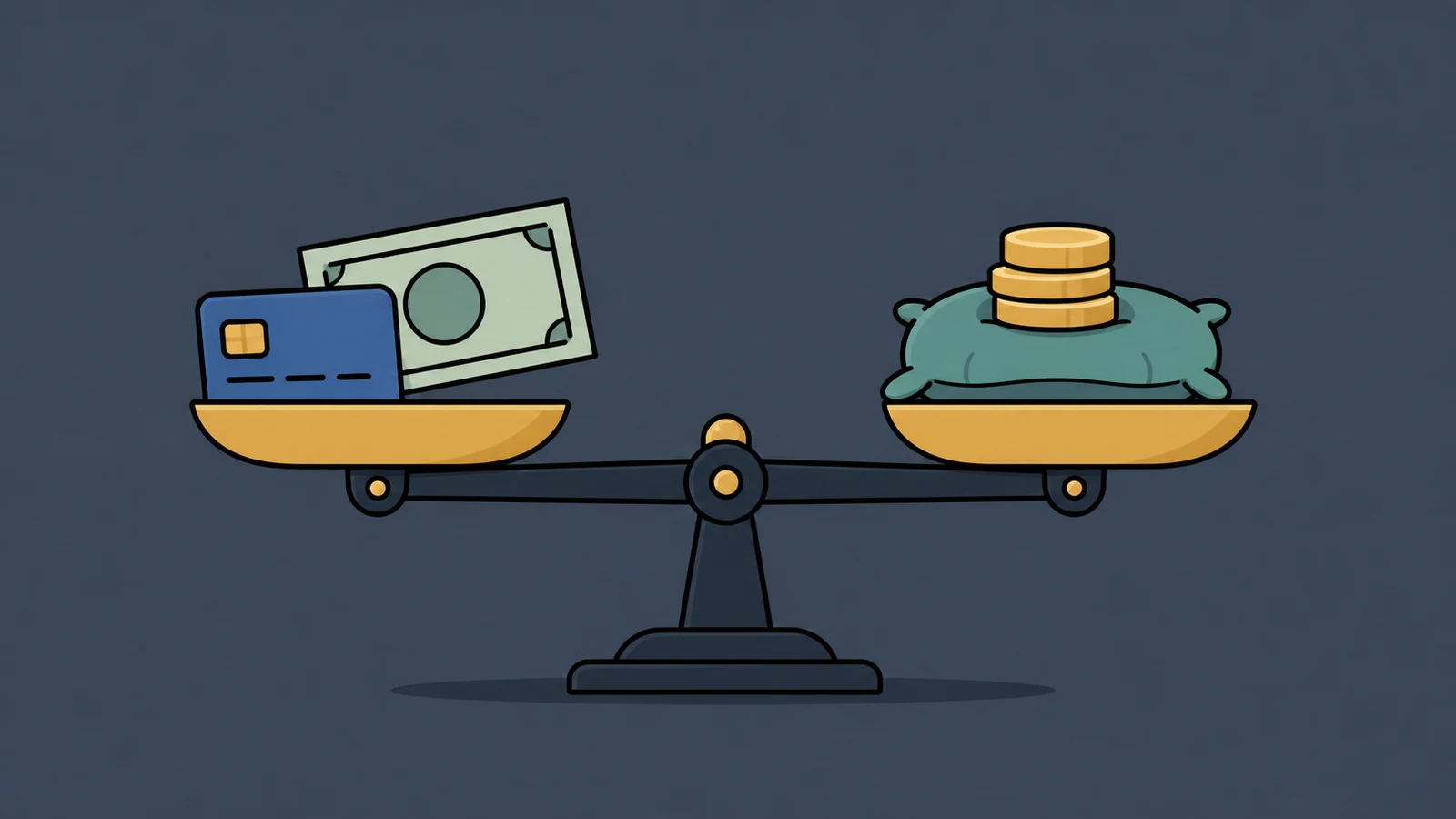
When you have debt and very little savings, the next move can feel annoyingly circular.
If you put extra cash toward debt, one surprise expense may go right back on the card. If you put extra cash into savings, the debt keeps charging interest. Both concerns are real.
The answer is usually not “all debt” or “all savings.” For many people, the safer starting point is a small emergency cushion while keeping debt payments current, then a more focused plan for high-interest debt.
First, Stay Current
Before choosing between extra debt payoff and extra savings, protect the basics.
Minimum payments, rent or mortgage, utilities, insurance, food, transportation, and required medical costs come first. Missing a required payment can create fees, credit damage, service interruptions, or bigger problems.
Extra payments are useful only after the essentials are covered.
That may sound obvious, but it matters. A debt payoff plan that causes late bills is not a strong plan. It is just moving the mess to a different room.
Why A Small Cushion Helps
A starter emergency cushion does not need to be huge to be useful.
Even $100 or $500 can keep a small surprise from becoming new credit card debt. A tire patch, prescription, utility spike, or school fee may not wait politely until the debt is gone.
That is why the first $100 in savings can matter. It gives you a little space between life and the card.
This does not mean you should ignore high-interest debt for years while building a perfect emergency fund. It means having no cash at all can make debt payoff harder to sustain.
High-Interest Debt Deserves Attention
Credit card debt and other high-interest balances can grow quickly.
Interest is the cost of borrowing money. The higher the rate, the more expensive it is to carry the balance over time. If a card charges a high annual percentage rate, extra payments can reduce future interest and help you get out from under the balance faster.
Once you have a small cushion, it often makes sense to send extra cash toward the highest-interest debt, especially if the minimum payments are already current.
The exact order can vary. If you need help choosing a payoff sequence, start with how to decide which debt to pay first.
A Balanced Starter Order
For many households, a reasonable sequence looks like this:
- Keep required bills and minimum debt payments current.
- Build a small emergency cushion, such as $100 to $500.
- Put extra cash toward high-interest debt.
- Keep adding slowly to emergency savings as debt comes down.
- Grow the emergency fund more once the high-interest debt is under control.
This is not a law. It is a practical default.
If your job is unstable, your car is unreliable, or your household has medical needs, a larger cash cushion may need to come earlier. If the debt is extremely expensive or past due, the payoff plan may need more attention right away.
Watch For The Credit Card Loop
The biggest warning sign is paying extra on a card and then needing to use the same card for normal expenses.
That loop can happen when the payment amount is too aggressive. It feels productive on payment day, then becomes frustrating when groceries, gas, or a bill pushes the balance back up.
If that keeps happening, lower the extra payment and build more cash buffer. The goal is not the largest possible payment this week. The goal is a payment pattern that does not collapse next week.
Do Not Invest Emergency Cash
Money needed for short-term emergencies should usually stay accessible and low-risk.
Stocks, crypto, and other volatile investments can lose value right when you need the cash. Investing can be a smart long-term habit, but emergency savings have a different job: being available.
Use boring accounts for boring jobs. In personal finance, boring is sometimes a compliment.
Try This
Write down three numbers:
- Your current emergency savings.
- Your minimum debt payments.
- The interest rate on each debt.
Then choose one small target. It might be saving the first $250 before extra debt payments, or adding $25 to the highest-interest card while still saving $10 per paycheck.
The best next step is the one that reduces risk without pretending real life will stop sending bills.