Trump Accounts Start July 4, 2026: A Reminder For Families
Trump Accounts are starting up in 2026. Here is what families should have ready before checking Form 4547 and the $1,000 pilot contribution.
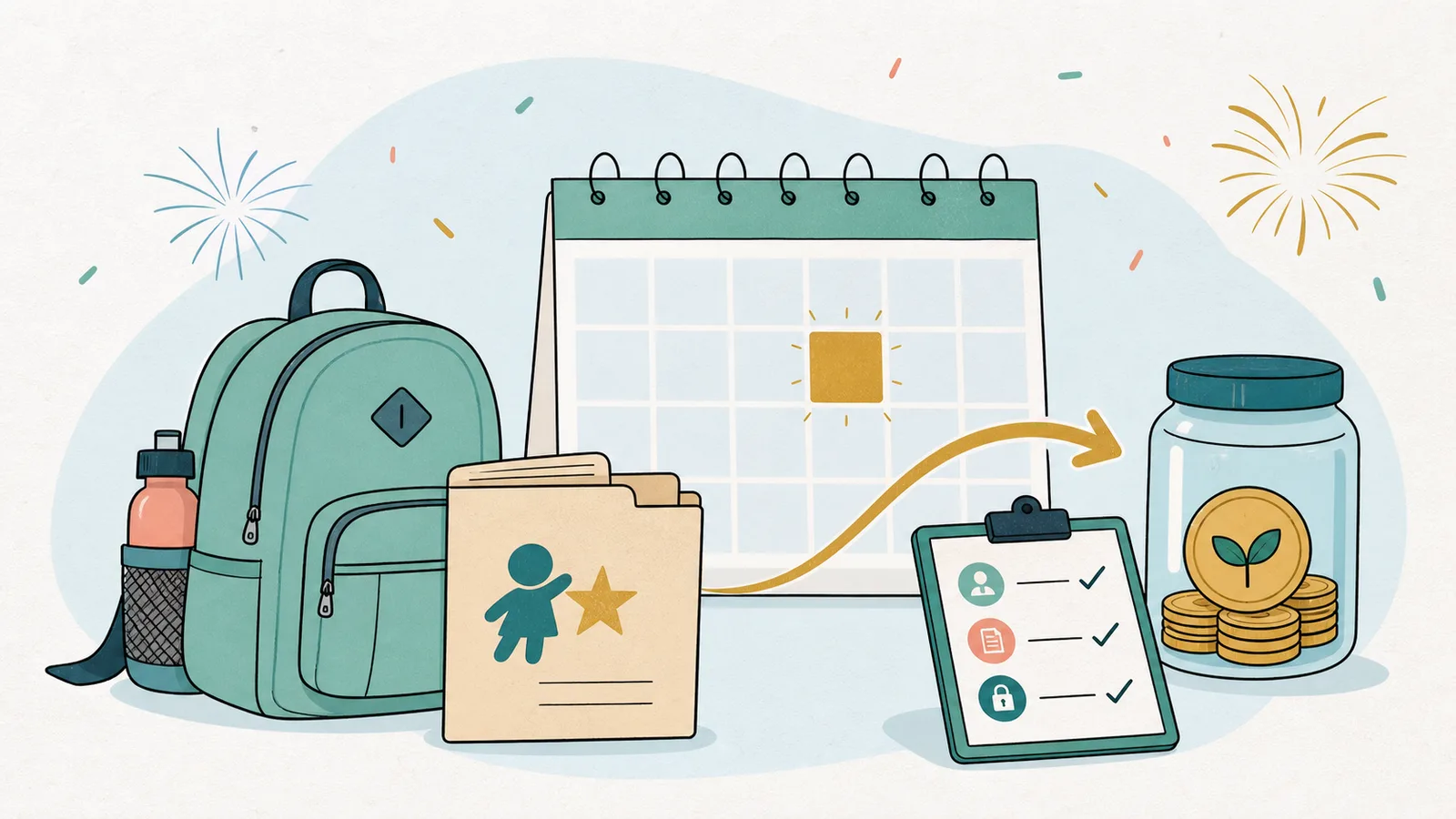
Trump Accounts are moving from headline to household checklist.
The account rules already exist, the IRS has Form 4547 instructions, and the IRS Trump Accounts page now points families toward signing in with an IRS account and submitting the form. The date to keep on your radar is July 4, 2026, because the IRS instructions say contributions and pilot program deposits do not begin before that date.
This is not a reason to rush. It is a reason to know what to check.
If you want the broader explanation first, start with the Trump Accounts starter guide. This reminder is focused on the startup period and the practical items families may want ready.
What Is Starting Up?
A Trump Account is a type of traditional IRA established for the exclusive benefit of a child.
The IRS says parents, guardians, and other authorized individuals may be able to establish these accounts for eligible children. The child is the account owner, while an authorized adult handles the election and account responsibilities while the child is a minor.
There is also a $1,000 federal pilot contribution for some eligible children. That pilot contribution is not the same thing as general account eligibility.
That distinction matters. A child may be eligible for an account but not eligible for the $1,000 pilot contribution.
The July 4 Timing
The IRS Form 4547 instructions say contributions cannot be made to a Trump Account before July 4, 2026. The instructions also say no pilot program contribution will be deposited before July 4, 2026.
That makes late June a good time to gather information, not a good time to assume the account is already fully funded and ready.
The IRS Trump Accounts page says the online process involves signing in or creating an IRS account, completing and submitting Form 4547, and checking the status of submitted election forms. The page also says the process should take 5 to 10 minutes.
Five to 10 minutes is the form process. The decision still deserves more than five to 10 minutes of thought.
What Families May Need Ready
According to the IRS Trump Accounts page, families should expect to need:
- An ID.me account.
- The child’s Social Security number.
- The child’s date of birth.
- The child’s address.
That is the basic paperwork side.
Before submitting anything, also confirm who is allowed to make the election. The Form 4547 instructions have rules for the authorized individual, and those rules can differ depending on whether the election is only to open the account or also to request the $1,000 pilot program contribution.
If more than one adult is involved in the child’s life, slow down here. The wrong adult making an election could create confusion that is much more annoying than simply reading the form instructions first.
Who May Qualify For The $1,000 Pilot Contribution?
As of the IRS instructions reviewed June 22, 2026, a child generally must meet several requirements for the $1,000 pilot program contribution.
The child must:
- Be anticipated to be a qualifying child of the authorized individual making the pilot program contribution election.
- Have been born after December 31, 2024, and before January 1, 2029.
- Have not had a prior pilot program contribution election processed.
- Be a U.S. citizen.
- Have a valid Social Security number.
Again, that is the pilot contribution list. The broader account eligibility rules are not identical.
This is where headlines can be a little too tidy. The real question is not simply “Do I have a child?” It is “Which part of the program does this child qualify for, and who is allowed to file the election?”
It Is Still An IRA-Related Account
During what the IRS calls the growth period, Trump Accounts have special rules. The IRS instructions say the account can only be invested in eligible investments, has a separate contribution limit from other IRAs, generally restricts distributions, and does not allow an individual deduction under section 219 for contributions to the account.
That means this is not a normal bank savings account with a new name.
It is also not a replacement for a household emergency fund. A child’s long-term account may be useful, but it does not help much if the family has no cash for a broken appliance, missed paycheck, or car repair. If the basics are thin, a starter savings cushion still matters.
The account can be worth understanding without letting it jump ahead of every other financial priority.
What To Watch For
During a new program rollout, watch the official pages rather than social screenshots.
Focus on:
- The current IRS Trump Accounts page.
- The current Form 4547 instructions.
- Whether the online process is available for your situation.
- Whether the child is eligible for the account.
- Whether the child is eligible for the $1,000 pilot contribution.
- What happens after the election is submitted.
- How activation and investment selection will work.
Be careful with anyone promising a shortcut, guaranteed outcome, or paid access to something that should begin with official IRS and Treasury information.
The Practical Reminder
If your family may qualify, the practical next step is not to open five tabs and start clicking in a hurry.
Make a small checklist:
- Child’s full legal name as it appears on the Social Security card.
- Child’s Social Security number.
- Child’s date of birth and address.
- The adult who will make the election.
- Whether the goal is account opening only or account opening plus the pilot contribution election.
- The official IRS page you will use to begin.
Then review Form 4547 and the IRS Trump Accounts page before submitting anything.
July 4, 2026 is the startup marker. The better move before then is to get the facts straight, keep expectations calm, and use the official process when you are ready.
Source notes: Reviewed June 22, 2026. Start with the IRS Trump Accounts page, IRS Instructions for Form 4547, IRS About Form 4547, and the official Trump Accounts site before making decisions.