How Saving $5 A Day Adds Up
Five dollars will not fix your whole financial life, but it can make saving visible fast enough to keep going.
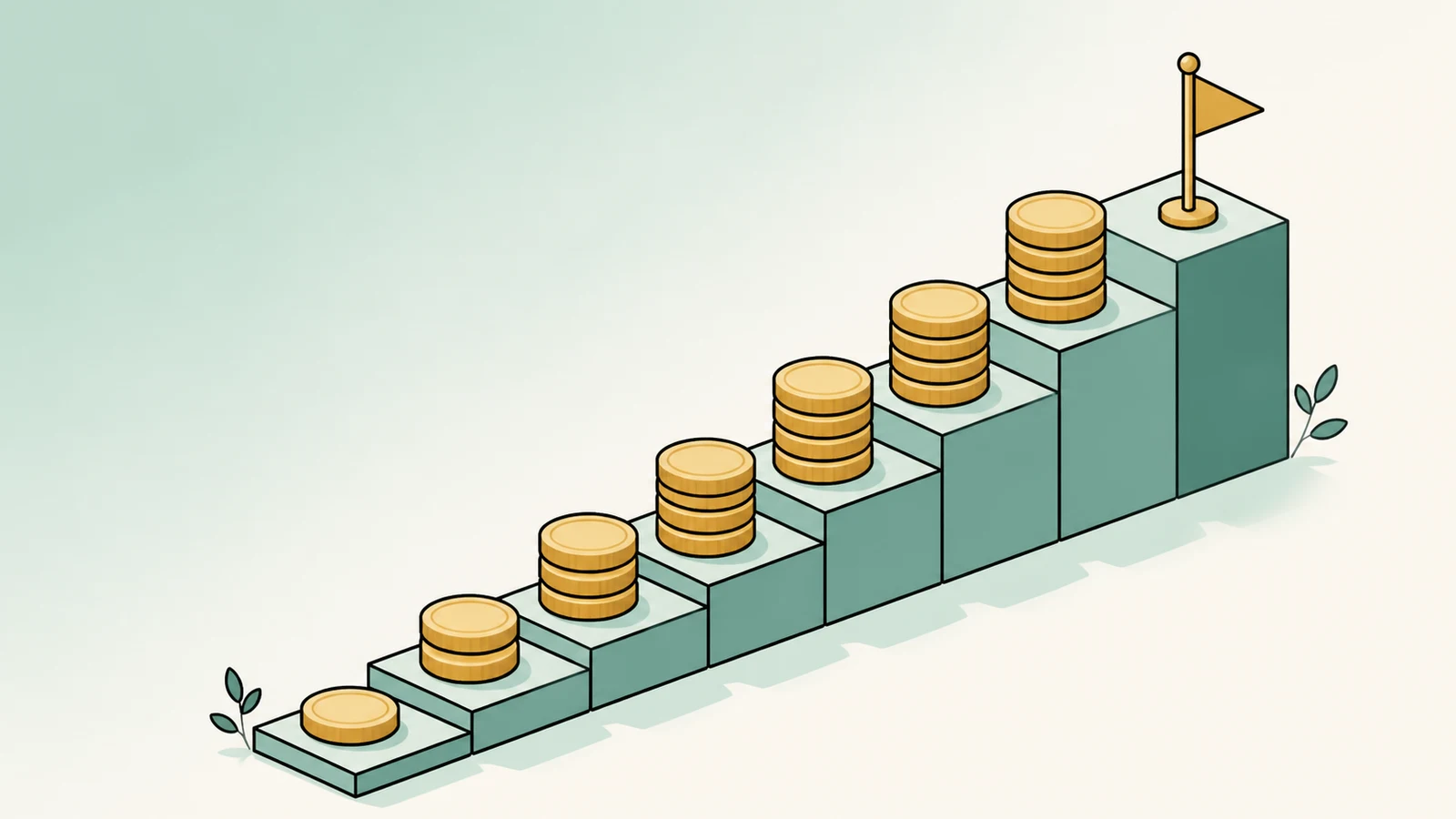
Here is the whole graphic:
$5 a day becomes $1,825 in a year.
That is the post. Almost.
Five dollars is small enough to ignore, which is why it works as a starting point. It does not require a full budget renovation, a dramatic lifestyle speech, or a Sunday night meeting with a spreadsheet that looks disappointed in you.
It is just one small transfer. Repeated.
The Simple Math
Picture this as a timeline:
- Day 1: $5
- Week 1: $35
- Month 1: about $150
- Year 1: $1,825
- Year 5: $9,125 before interest or investment growth
The numbers are not fantasy. They are arithmetic with a calendar attached.
Will $5 a day make you rich by next Friday? No. If it did, everyone at the gas station would be quietly retired.
But $1,825 can do real work. It can become part of an emergency cushion. It can keep one surprise bill from turning into more credit card debt. It can prove that saving can start moving in the right direction, especially after the first $100 in savings gives you a place to stand.
First, Make It Useful
The first job for small savings is usually stability, not investing.
That may sound less exciting, but it matters. If you have high-interest credit card debt or no emergency savings, putting every spare dollar into the market can backfire. Stocks and ETFs can be useful long-term tools, but emergency savings should not be riding the market when life decides to send an invoice.
So the first version of the $5 habit might go toward:
- A starter emergency cushion.
- A car repair fund.
- A bill buffer.
- A credit card payoff plan.
- A cash reserve before investing.
That is not a detour from wealth-building. It is the floor.
Make The Transfer Automatic
The best version of this is boring.
Set a recurring transfer for an amount that will not wreck your week. It might be $5 a day, $10 a week, or $20 every payday. The right number is the one you can repeat without creating a new problem.
Automatic saving works because it moves the transfer before your day gets a vote. Your day has opinions. Your day wants lunch, shipping, and one subscription you forgot existed.
Let the system vote first.
Keep The Visual Simple
If this becomes a social graphic, do not overbuild it.
Use one chart:
- $5/day
- $35/week
- $150/month
- $1,825/year
Then add one line:
Small savings count when they repeat.
That is enough. The point is not to make the graphic look like a tax form in a neon jacket. The point is to make the pattern obvious.
When It Becomes Investing
Once the basics are sturdier, the same habit can point toward investing. A recurring savings transfer can eventually become a recurring contribution to a retirement account, index fund, or low-cost ETF.
That is where the habit gets interesting. You are not just saving $5. You are practicing the motion that long-term investing depends on: consistent contributions, boring repetition, and not needing every move to feel dramatic.
The market part comes later for some people. The habit can start now.
Try This
Pick an amount you can repeat for 30 days. Name the account or bucket something obvious, like Starter Cushion or First $500.
Then schedule the transfer.
After 30 days, look at the balance. If it helped, keep going. If it strained things, lower the amount. The goal is not to impress anyone with the number. The goal is to build a system you can actually keep.